Exhibit 01 · Sculpture
Shiva Nataraja
The Cosmic Dance
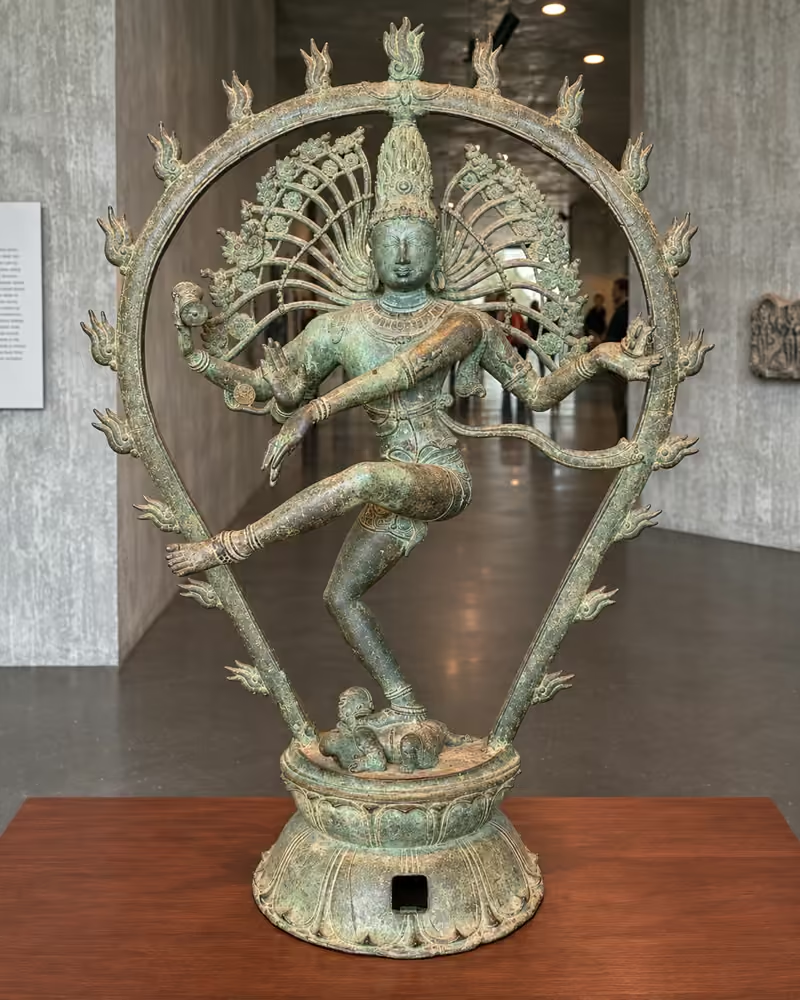
The bronze’s ring of flames and flying locks suggest motion from every side. Shiva’s face remains composed.
- Origin
- Tamil Nadu, India · Chola period
- Date
- Circa 950–1000 CE
- Material
- Copper alloy
- Collection
- LACMA · M.75.1
Image Provenance
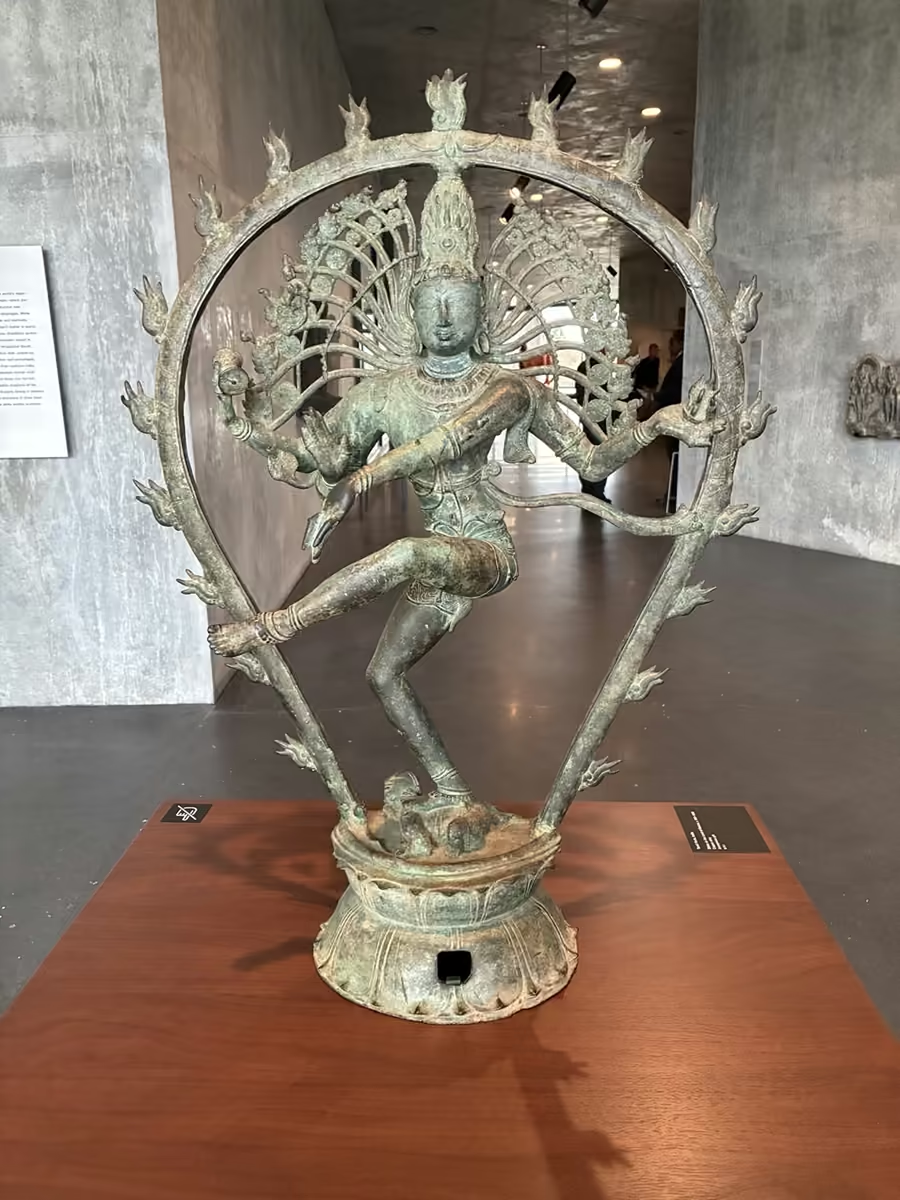
Original and AI-Assisted Edit
AI tightened the crop and reframed the photograph for a more head-on view. The process changed some fine details of the bronze. Use the original photograph to inspect the sculpture.
Shaiva Tradition
Creation, Dissolution and Liberation
The drum marks creation and the flame marks dissolution. Shiva’s open palm offers reassurance. The figure underfoot embodies ignorance and the raised foot offers refuge. LACMA records that the opening in the pedestal allowed the sculpture to be carried in religious processions.
Read LACMA’s Curatorial NotesModern Analogy
A Second Nataraja at CERN
India gifted CERN its own two-metre Nataraja in 2004 to mark their scientific collaboration. Its plaque draws on Fritjof Capra’s The Tao of Physics, which uses the dance as a metaphor for particles coming into being and decaying.