
What the researchers tested
Reed and colleagues compared healthy male fruit flies with Pink1-deficient males. Shielding reduced the field to about 5.6 nanotesla, versus Earth’s typical 25–60 microtesla. Exposure began on day 10 or 20. Survival groups contained 40–60 flies per treatment. Methods [1]
| Measure | Finding | Boundary |
|---|---|---|
| Survival | The abstract reports about 20% longer lifespan in Pink1 flies; the day-20 group had significantly lower mortality risk. | The day-10 result was not significant. Healthy-fly mortality differences were not significant. |
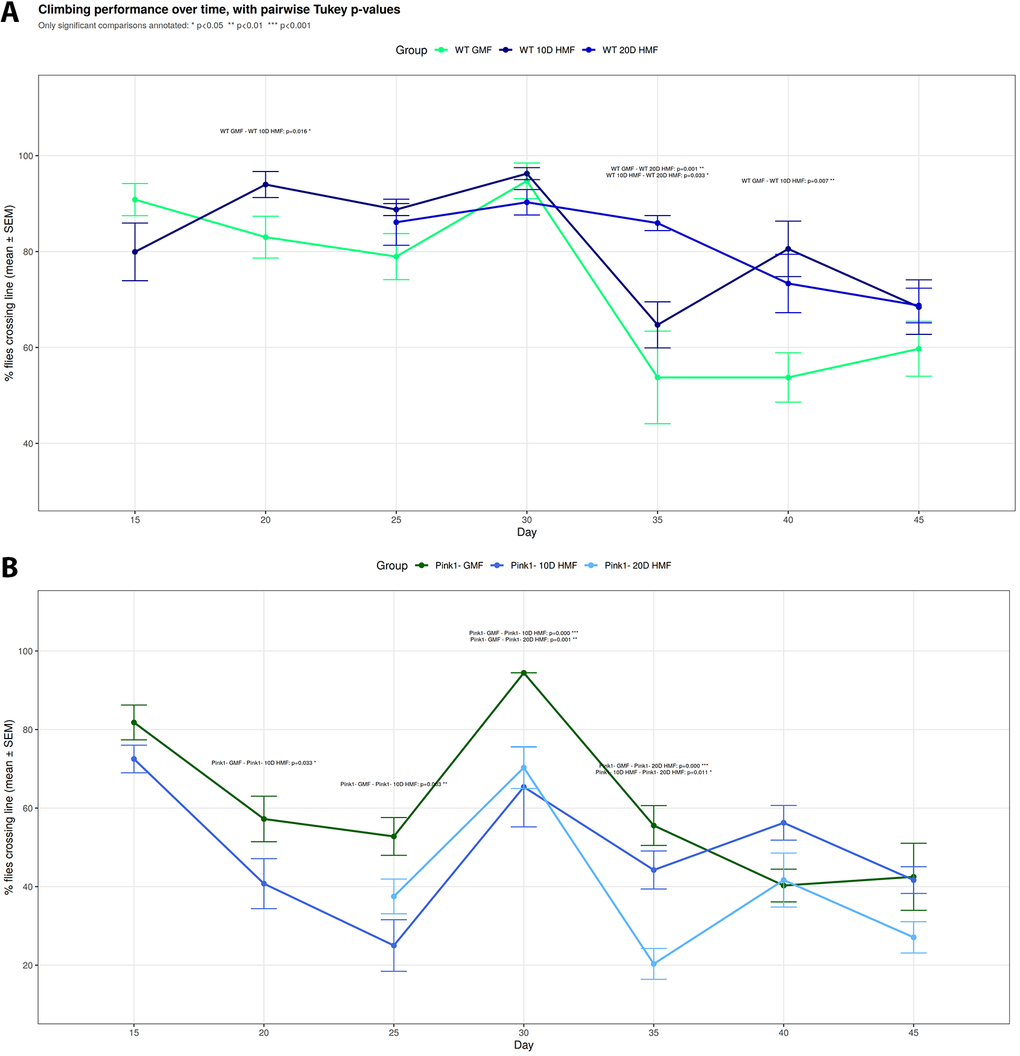
| Climbing | Improved in healthy flies; worsened in Pink1 flies. | Longer survival did not mean better physical performance. |
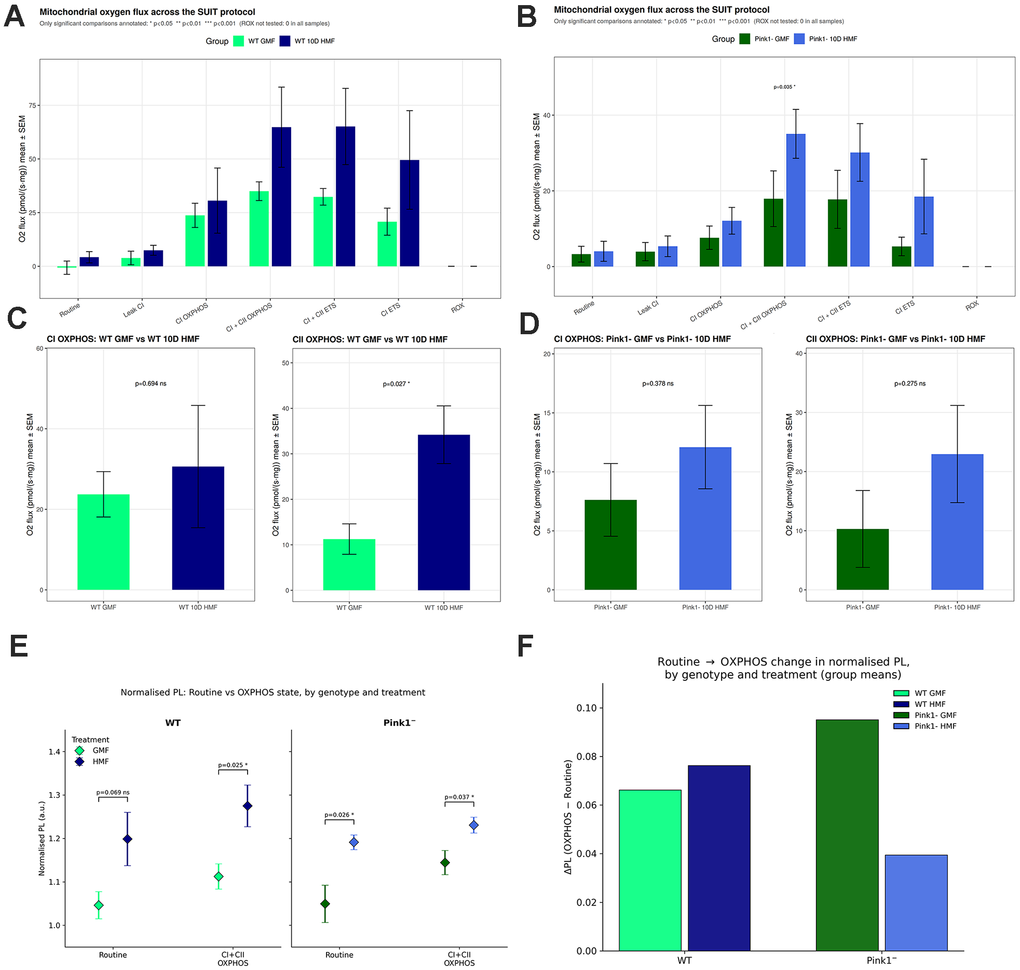
| Mitochondria | Complex II-supported respiration increased significantly in healthy flies; the Pink1 increase was not significant. | A proposed compensatory mechanism needs direct testing. |
Quantum diamond sensors measured radical-related signals. They are measurement tools, not evidence of quantum consciousness. The study used males only and small physiological replicate groups. Independent replication remains needed. Results and discussion [1]
Why the human connection is plausible
There is a biological bridge worth investigating. PINK1-related mitochondrial dysfunction has been studied across flies, mouse cells and patient-derived cells, including induced pluripotent stem cell-derived dopamine neurons. That makes human cell models a reasonable place to test the next hypothesis. It does not show that those models respond to magnetic shielding in the same way. Separate PINK1 mechanism study [3]
Human-derived cells have also shown responses to hypomagnetic conditions. Mo and colleagues reported altered actin assembly and reduced adhesion and migration in SH-SY5Y neuroblastoma cells. These are tumour-derived cells in culture, not healthy people. Cellular sensitivity cannot establish a treatment, an ageing benefit or a whole-body effect. Human-cell experiment [2]
How could we test translation to humans?
The following is an AkashicNET research proposal, not a protocol validated by this paper:
- Replicate the fly findings. Use independent laboratories, sham shielding, blinded assessments and matched temperature, light, vibration and handling. Measure the static field and other electromagnetic changes separately.
- Test human cells. Compare healthy cells, PINK1 patient-derived neurons and genetically corrected controls. Measure respiration, ATP production, oxidative damage, mitochondrial clearance and cell survival across field strengths and exposure durations.
- Study mammalian function and survival together. Include both sexes and assess movement, cognition and organ health. A survival gain accompanied by disability needs a different interpretation from improved healthspan.
- Consider controlled human trials only after sufficient safety and reproducibility evidence. Predefine outcomes and analysis, use credible sham exposure, and report adverse effects. Biomarker changes alone would not prove longer life.
There is no valid conversion from “20% in a fly model” to a number of additional human years. The exposure, genotype, developmental timing and outcome all need their own human evidence.
Related studies, different interventions
Our earlier magnetic-bacteria Reddit analysis [5] concerns bacteria fed to worms. The Life on Magnet webpage [6] examines stronger static fields applied to mice. This new study instead reduces the ambient magnetic field. Together they suggest useful comparisons, but they do not replicate one another or identify a universally beneficial magnetic environment.
Sources
- Reed J, Fromhold M, Moisoi N, Mather M, Chakrabarti L. Hypomagnetic fields modulate lifespan, physical ability and mitochondrial metabolism in a Pink1 model of neurodegeneration. Aging, 23 Sep 2026. DOI: 10.18632/aging.206424.
- Mo et al. Shielding of the Geomagnetic Field Alters Actin Assembly and Inhibits Cell Motility in Human Neuroblastoma Cells. Scientific Reports, 2016. The publisher lists a corrigendum.
- Vos et al. Cardiolipin promotes electron transport between ubiquinone and complex I to rescue PINK1 deficiency. Journal of Cell Biology, 2017. Mechanistic context, not a magnetic-field experiment.
- SciTechDaily, 30 Sep 2026: Could Earth’s Magnetic Field Be Secretly Influencing How We Age? The user-supplied news lead; not independent replication.
- AkashicNET × r/NeuronsToNirvana: Magnetic Bacteria Extended Lifespan by 43%. Prior contextual commentary on a separate worm study.
- AkashicNET: Life on Magnet? Prior source analysis of a separate mouse experiment.
Transparency and evidence status
The user selected the study and asked about human extrapolation. AI assistance checked the retrieved primary-paper text and drafted this original summary and proposed research pathway. The fly paper’s methods and main results were read; supplementary files and raw data were not independently analysed. The human-cell paper was consulted; source [3] was available through indexed abstract text, while its direct full-text page was blocked. No exhaustive replication search or clinical evidence review was completed.
Evidence: observations within the cited experiments. Interpretation: the comparison across studies. Hypothesis: translation to human mitochondrial function or health. No new experiment, clinical recommendation or model-support claim is made here.