An Invitation Without An Ideological Price
Hospitality can become transactional. A meal may arrive with an expectation: accept our beliefs, adopt our vocabulary, join our community or become more like us.
But another possibility exists.
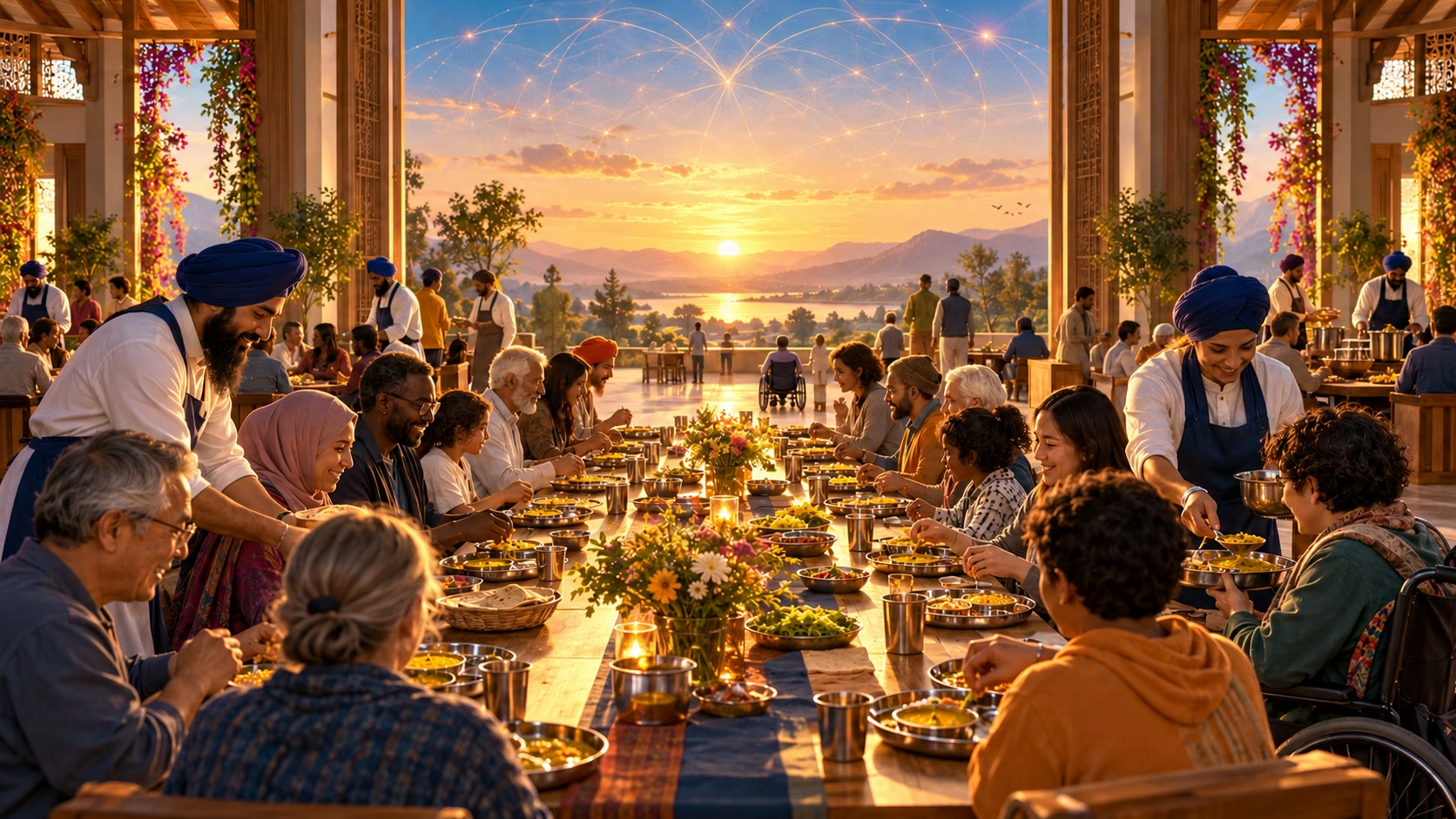
A person enters hungry. They are welcomed, offered food and allowed to remain themselves. They may listen, speak or quietly leave. Nothing spiritual has to be performed in return.
This companion asks what happens when service becomes an open doorway rather than a recruitment pathway. It does not suggest that different traditions are interchangeable.
Difference need not prevent dignity, nourishment or service.
Langar And Seva
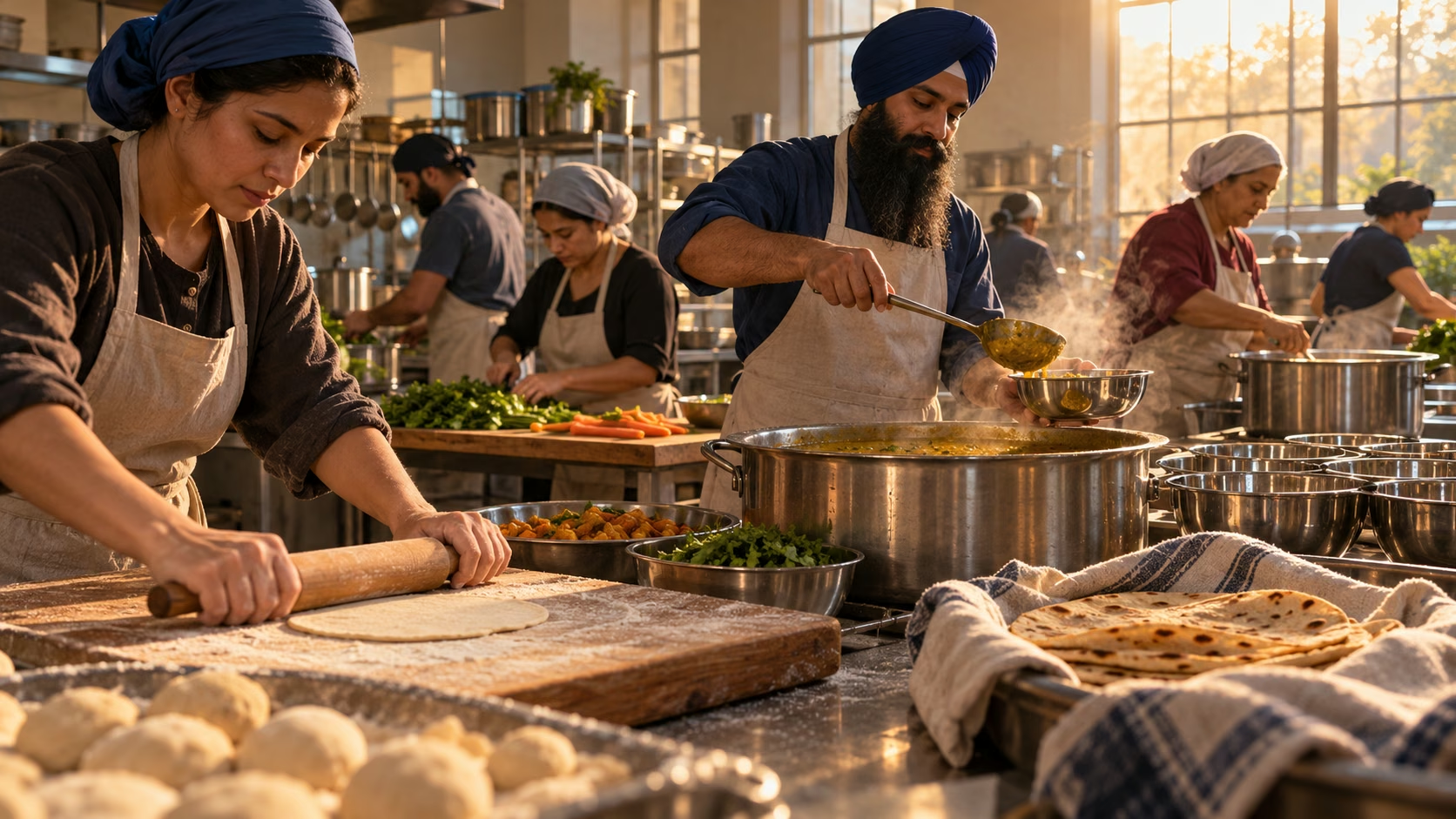
Within Sikh tradition, langar is the communal kitchen and shared meal, while seva refers to selfless service.
The SGPC’s historical account associates the institution of langar with Guru Nanak’s community at Kartarpur. [1] The Sikh Coalition describes langar as volunteer-prepared communal food, open to everyone without discrimination, and places it within an egalitarian challenge to caste barriers. [2]
Its meaning cannot be reduced to a modern wellbeing exercise. Langar is rooted in Sikh history, religious practice and a distinctive ethical vision.
The invitation does not require conversion. Respecting the setting and its customs is different from being required to adopt its beliefs. Welcoming someone does not mean erasing the identity of the host: Sikh hospitality can remain distinctly Sikh while welcoming people who are not. [2]
These imagined table scenes are inspired by the ethics of hospitality. They are not a depiction of a specific gurdwara or a guide to langar protocol. Traditional pangat commonly involves sitting together on the floor for those who are able; the artwork uses accessible seating as an artistic adaptation. [2]