
Personal Reflection · Buddhist-Inspired Inquiry · 10 October 2026
A Glimpse Is Not Embodiment
An experience may briefly feel like an opening beyond familiar perception. What matters afterwards is how we understand it, question it and live with others.
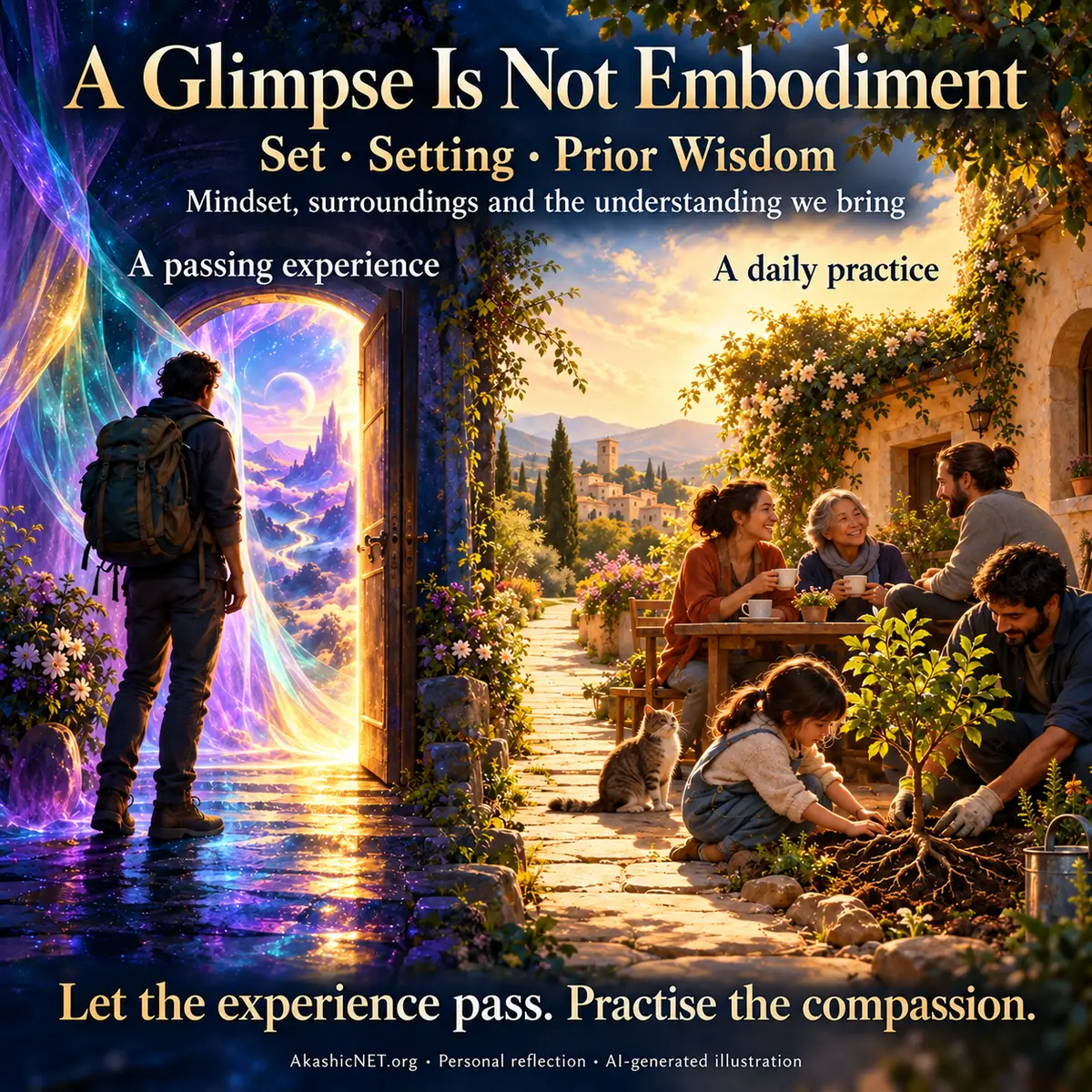
Let the experience pass. Practise the compassion.
How The Idea Developed
From A Playful Metaphor To A Practical Question
This reflection began with a question about whether a THC vape could be imagined as a modern chillum within a personally combined Buddhist and Aghoric vocabulary. That was a contemporary metaphor, not an established Buddhist practice or a claim of spiritual authority. The conversation then became more specific:
Choose The Lens
The contributor asked for a spiritual Buddhist perspective. The response shifted towards compassion, discernment and the effect of an experience on ordinary conduct.
Describe The Glimpse
The contributor described briefly opening the “doors of perception filters”. Here, that wording expresses how an experience can feel. It does not establish a literal brain-filter mechanism or access to a truer external reality.
Distinguish Experience From Embodiment
The clarification was “Not fully embodiment”. The first illustration translated this into a passing experience alongside a daily practice. “Glimpse” here names a perceived opening, without certifying awakening.
Bring Context Back In
“Set & Setting is important. Baseline wisdom a cofactor.” This contributor-supplied refinement shaped the second edition: mindset, surroundings and the understanding we bring.
See The First Edition
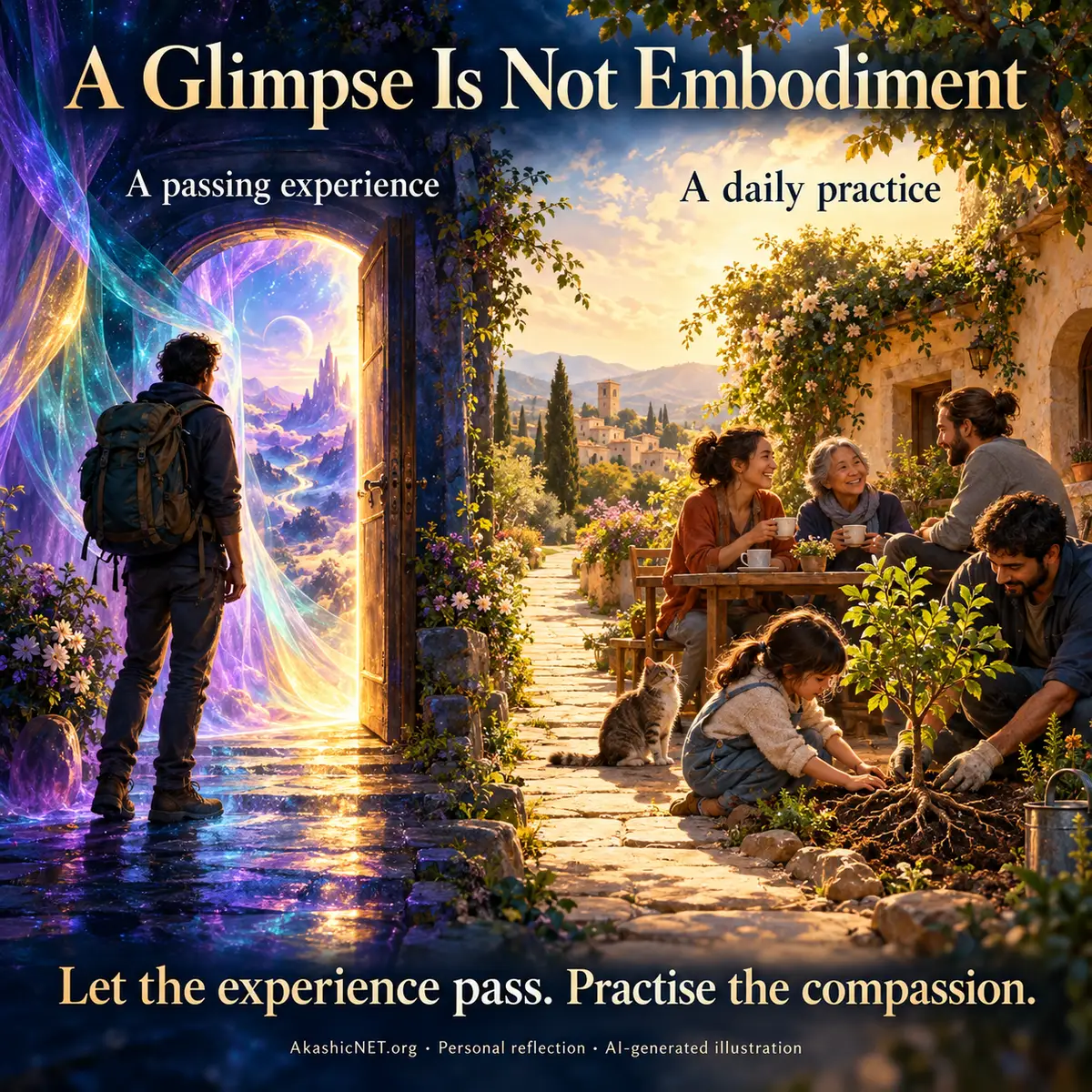
The revision adds context to the original distinction rather than claiming that any particular experience guarantees insight.
A Reflective Framework
Set · Setting · Prior Wisdom
Set
The mindset brought to the moment: mood, expectations, intentions and assumptions.
What am I hoping to find, and how might that shape what I notice?
Setting
The physical and social surroundings: place, company, atmosphere and available support.
What in my surroundings shapes the meaning I give this experience?
Prior Wisdom
The contributor’s proposed cofactor: existing ethical practice, humility, life experience and willingness to revise an interpretation.
Can I hold the experience gently without treating certainty as proof?
“Prior wisdom” is a working spiritual and editorial idea here, not a validated clinical predictor. Familiarity with altered states is not automatically wisdom. These influences can overlap; the three-part layout is a way to reflect, not a scientific equation.
The Buddhist Tension Deserves Honesty
A compassionate intention can be sincere while questions about intoxication remain. Plum Village’s Five Mindfulness Trainings connect practice with generosity, deep listening and mindful consumption; the fifth training explicitly includes avoiding alcohol and drugs. This reflection does not turn a personally meaningful THC experience into Buddhist endorsement. [1]
Our proposed test of integration is practical: after the state has passed, is there more patience, less grasping, greater openness to correction and more care for others? These are questions for reflection, not a diagnostic test of enlightenment.
The small gesture of thanks to hotel cleaners offers a concrete example of the kind of everyday action this discussion values. No claim is made that cannabis caused the generosity.
Grounding The Reflection In Dharma
The Noble Eightfold Path
Dharma is the broader Buddhist teaching and practice; the Noble Eightfold Path offers a specific foundation for this reflection. SN 45.8 describes all eight factors. The questions below are our contemporary applications, not translations of the text or a complete account of the path. [5]
| Path Factor | A Question For Everyday Integration |
|---|---|
| Right View | Does my interpretation help me understand suffering and its causes? |
| Right Intention / Resolve | Am I cultivating goodwill and letting go, or chasing another experience? |
| Right Speech | Can I describe what happened honestly, without exaggerating its meaning? |
| Right Action | What caring, non-harming action follows? |
| Right Livelihood | How does this understanding affect the way I work and support myself? |
| Right Effort | Which helpful qualities can I cultivate and sustain? |
| Right Mindfulness | Can I attend to body, feelings and mind without clinging to them? |
| Right Concentration | Am I developing steadiness through practice? An intense state alone does not establish the meditative absorption described in the text. |
The path provides a deeper context for “embodiment”: understanding is expressed through intention, ethical conduct and sustained cultivation.
Where Research Helps, And Where It Stops
A cannabis balanced-placebo experiment found that receiving THC and expecting THC could each increase subjective intoxication. That supports taking expectations seriously; it does not show heightened wisdom or spiritual accuracy. [2]
A prospective, naturalistic psychedelic study linked aspects of mindset, context and baseline traits with reported experiences and wellbeing. It was observational, involved self-selected participants and studied psychedelics rather than THC vaping. It did not test the “prior wisdom” proposal used here. [3]
CDC guidance notes that recent cannabis use affects thinking, attention, memory and time perception. A powerful sense of insight therefore needs later reflection and checking, rather than being accepted because it feels compelling. A supportive setting and prior practice do not remove substance-related risks. [4]
Bring It Into Ordinary Life
What Remains When The Moment Passes?
- Describe: What did I experience, before interpreting its cause?
- Revisit: What still seems useful when sober and rested? What deserves checking?
- Practise: What small act of listening, generosity or care can I carry into today?
The image leaves the doorway open, but puts roots in the courtyard.
Sources & Creation Disclosure
- Plum Village: The Five Mindfulness Trainings. Primary tradition source for mindful conduct and the fifth training; one Buddhist tradition’s formulation.
- Balanced Placebo Design With Marijuana: Pharmacological And Expectancy Effects On Impulsivity And Risk Taking (2012). Primary experimental research; abstract and indexed excerpts reviewed. Not a spiritual-outcomes study.
- Haijen et al.: Predicting Responses To Psychedelics (2018). Abstract, methods and relevant discussion reviewed. Observational associations, not a controlled test of this framework.
- CDC: Cannabis And Brain Health. Public-health context for effects on cognition.
- SN 45.8: An Analysis Of The Path, translated by Thanissaro Bhikkhu. Primary Buddhist text defining the eight factors; used as the basis for the clearly labelled contemporary reflection questions.
Sources checked 10 October 2026. The conversation supplies personal meaning and questions; the sources supply limited supporting context. Neither establishes that THC grants Buddhist insight.
Human direction: the contributor initiated the inquiry, specified the Buddhist lens, distinguished a glimpse from embodiment, added set, setting and prior wisdom, requested grounding in Dharma or the Eightfold Path, and requested publication. Selected contributor wording is quoted above; the surrounding narrative is an edited account, not a verbatim transcript.
AI contribution: ChatGPT/Codex drafted and structured this page, checked the linked sources, wrote the image prompts, generated both illustrations and implemented the website update. The contributor’s guidance and corrections led the editorial direction. The headline and closing line were AI-assisted formulations.
Artwork: the second image revises the first with the added context. Both are symbolic, AI-generated scenes. Read the creation record and prompts.