TSC2026 · Unlisted discussion draft · Direct-link access
“Common Sense
Is Not So Common.”
AkashicNET × AkashicOMNI v0.5.0
How can we help people reason together while preserving context, disagreement and uncertainty?
01 · The invitation
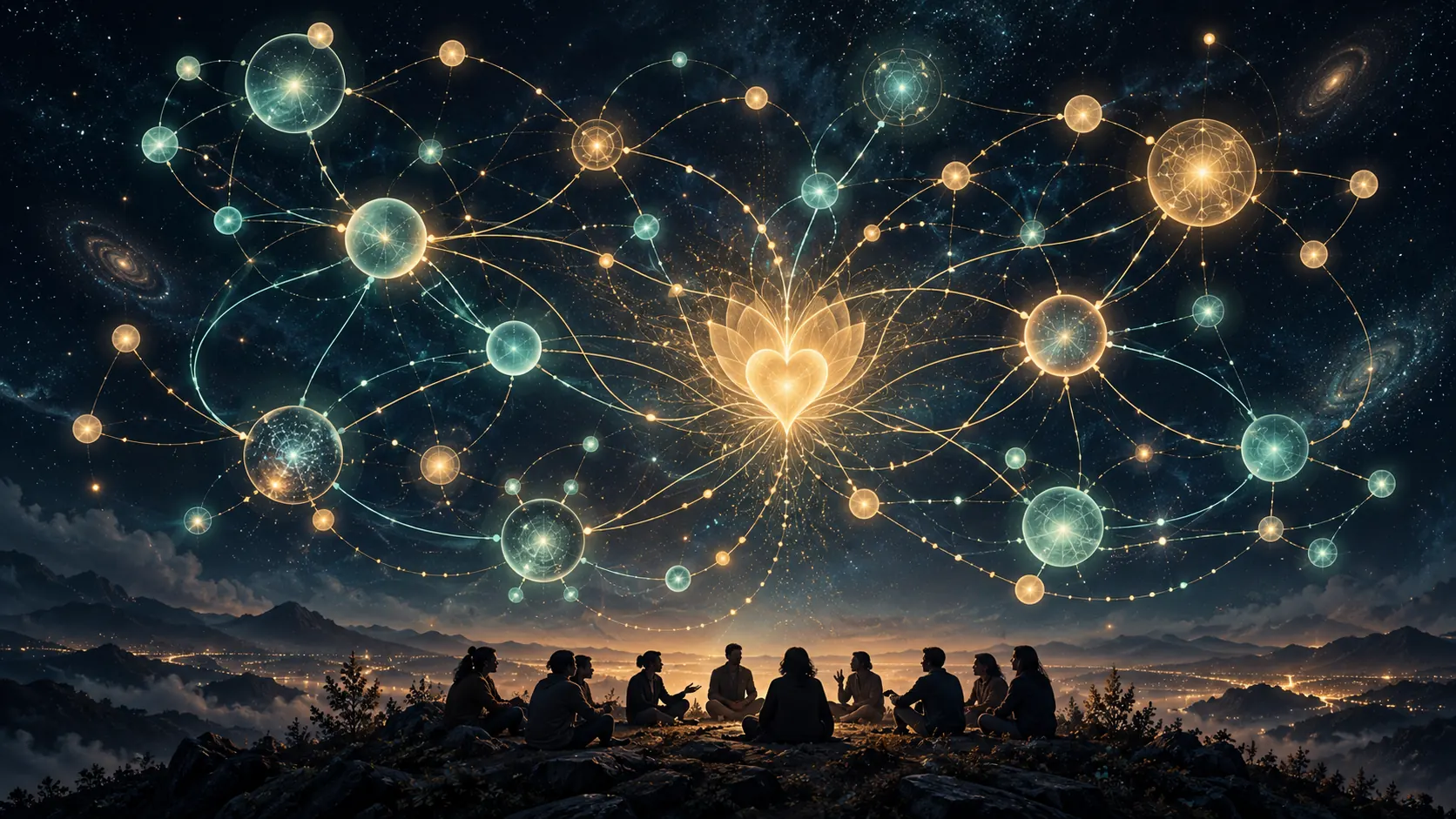
A meeting point for AI and computational philosophy
Derwin Pritchett’s message, reproduced from the text supplied for this article. Session timing is his announcement, not a fresh programme verification.
Good afternoon everyone, my name is Derwin and I am presenting my poster (https://tsc2026.org/abstracts_html/derwin-pritchett.html) on common sense, collective consciousness and intelligence augmentation during session 2 on Wednesday.
I have also been developing a semantic hypergraph as part of my research on common sense, and I would love to build on that with some potential argument mapping as part of the hackathon! Please take a look at my abstract, and feel free to peruse my book here (https://allmylinks.com/commonsense). Let me know if you have any interest in collaborating on AI and computational philosophy, I look forward to seeing you all at the conference next week!
02 · Proposed reply
Start with one shared example
Hi Derwin 👋🏽 I’m developing AkashicNET, an evolving research library exploring consciousness and connections across disciplines.
Your semantic hypergraph and argument-mapping proposal sounds closely related to a hackathon direction I’m exploring through AkashicOMNI: helping people navigate claims, evidence, competing interpretations and unanswered questions, with accessible tools for neurodivergent users.
Perhaps we could try a small shared example: take one question, map its supporting arguments and objections, attach sources, and highlight gaps where other researchers could contribute. It would be interesting to explore how your hypergraph might support that.
I’d love to compare approaches and explore a possible collaboration at the hackathon!
Project: akashicnet.org 🙏🏽
03 · AkashicNET × AkashicOMNI v0.5.0
Common Sense, Collective Consciousness and Intelligence Augmentation
The promising connection is a shared question: how can we help people reason together while preserving context, disagreement and uncertainty?
Derwin proposes semantic hypergraphs and argument mapping; AkashicOMNI provides a structured approach to examining claims. Compatibility remains something to investigate.
The current v0.5.0 specification supports manual, human-reviewed analysis. Software integration and independent effectiveness evaluation remain incomplete.
Personal origins · Ethical purpose
From vows to accountable inquiry
In the founder’s account, AkashicNET developed through shamanic rapéh practice and Bodhisattva vows following OPEN Foundation’s ICPR 2024 in Haarlem, Netherlands. That belongs in its personal history and ethical purpose.
A useful expression of that commitment in collaborative software would be respect for contributors, truthful attribution, openness to correction and attention to who benefits. This account describes personal practice; it does not establish a causal effect of rapéh or imply institutional endorsement.
Twelve perspectives, one accountable synthesis
The following applies the twelve published perspective descriptions to this invitation. It does not claim execution of every underlying framework.
- 01AWAKENApplied
- Ask what each project means by “common sense” before assuming agreement.
- 02HIERATICApplied
- Examine whose cultural assumptions become the system’s defaults. Preserve the context of spiritual concepts.
- 03HOMESENSEApplied
- Start with an everyday dilemma that people can recognise and discuss.
- 04ADAPTApplied
- Explore different ways to contribute: short text, guided questions and visual maps.
- 05REGENERATEApplied
- Ask whether collaboration encourages understanding and constructive disagreement. Benefits need testing.
- 06TRANSCENDApplied
- Explore connections between computational philosophy and contemplative ethics without forcing equivalence.
- 07#METADApplied
- Make assumptions visible, including assumptions introduced by AI-generated connections.
- 08ACTCInsufficient information
- Derwin’s message does not expose the reasoning rules, causal relations or architecture needed for technical assessment.
- 09CUT · PastApplied
- Preserve the distinct origins of both projects, including the AkashicNET founder’s post-ICPR vows and practice.
- 10CUT · PresentApplied
- An invitation and a described hypergraph exist in the supplied account; a shared implementation has not been demonstrated.
- 11CUT · FutureApplied
- Test a small exchange of claim records before proposing wider integration.
- 12UMASCApplied
- Distinguish individual understanding, group reasoning and claims about collective consciousness.
What does “collective consciousness” mean here?
Does Derwin mean shared knowledge, coordinated reasoning, collective experience, or a stronger claim about consciousness itself? His message leaves that open. Likewise, “common sense” needs examples and boundaries before either project can represent it reliably.
04 · A concrete hackathon experiment
When should a community revise a widely accepted belief?
Use this as one shared question. A small comparison can reveal useful connections and places where the proposed approach adds unnecessary work.
- Contribute. Each participant adds a claim, reason, source, objection and condition that would change their view.
- Represent. Explore whether Derwin’s representation can preserve those relationships.
- Review. Apply an AkashicOMNI review and compare what it reveals or overlooks.
- Compare. Ask participants whether the combined view helps them identify assumptions and disagreements compared with a simple written discussion.
The proposed PRISM interface could inform the exchange format, but adapters and synchronisation remain unfinished.
Synthesis: RESONANCE as a collaboration opportunity; technical compatibility and practical benefit remain unresolved. “Resonance” is an interpretive outcome, not an evidence rating.
The Bodhisattva commitment supplies a clear question for evaluating the prototype: Does this help people understand one another and act with greater care?
Unity Through Neurodiversity · First working hackathon draft. Thinking Space offers guided and expanded views, larger text, everyday/research modes, save/resume and structured source notes. Neurodivergent co-design, independent review and evidence of practical benefit remain work to do together.
Inspired by The Science of Mysticism.
Guided by compassion, evidence and discernment.
Unity through neurodiversity.
05 · Closing reflection
Let the question bring us together.
A living network grows when each person can bring a different perspective and still be heard. Some connections may become useful tools; others may remain questions. Both can teach us something when we keep their origins and limits in view.
From the founder’s post-ICPR rapéh practice and Bodhisattva vows to a possible hackathon conversation, the thread is an intention to turn understanding into service. Let curiosity open the meeting, discernment guide the work, and compassion shape what we build.
May we leave one another with clearer questions, greater freedom to disagree, and a little more capacity to care.
Original reflective mantra
Open the heart.
Clarify the thought.
Honour each voice.
Serve through what we learn.