What Does It Feel Like?
People report speech, writing, imagery or knowing that feels received rather than deliberately composed. Interviews, questionnaires and careful descriptions can study these reports.

AKASHICPSI · RESEARCH & DISCERNMENT
An experience worth understanding.
A source still open to investigation.
Inspired by Helané Wahbeh’s The Science of Channeling, this research companion asks what has been studied, what the findings support and how to investigate the questions that remain.
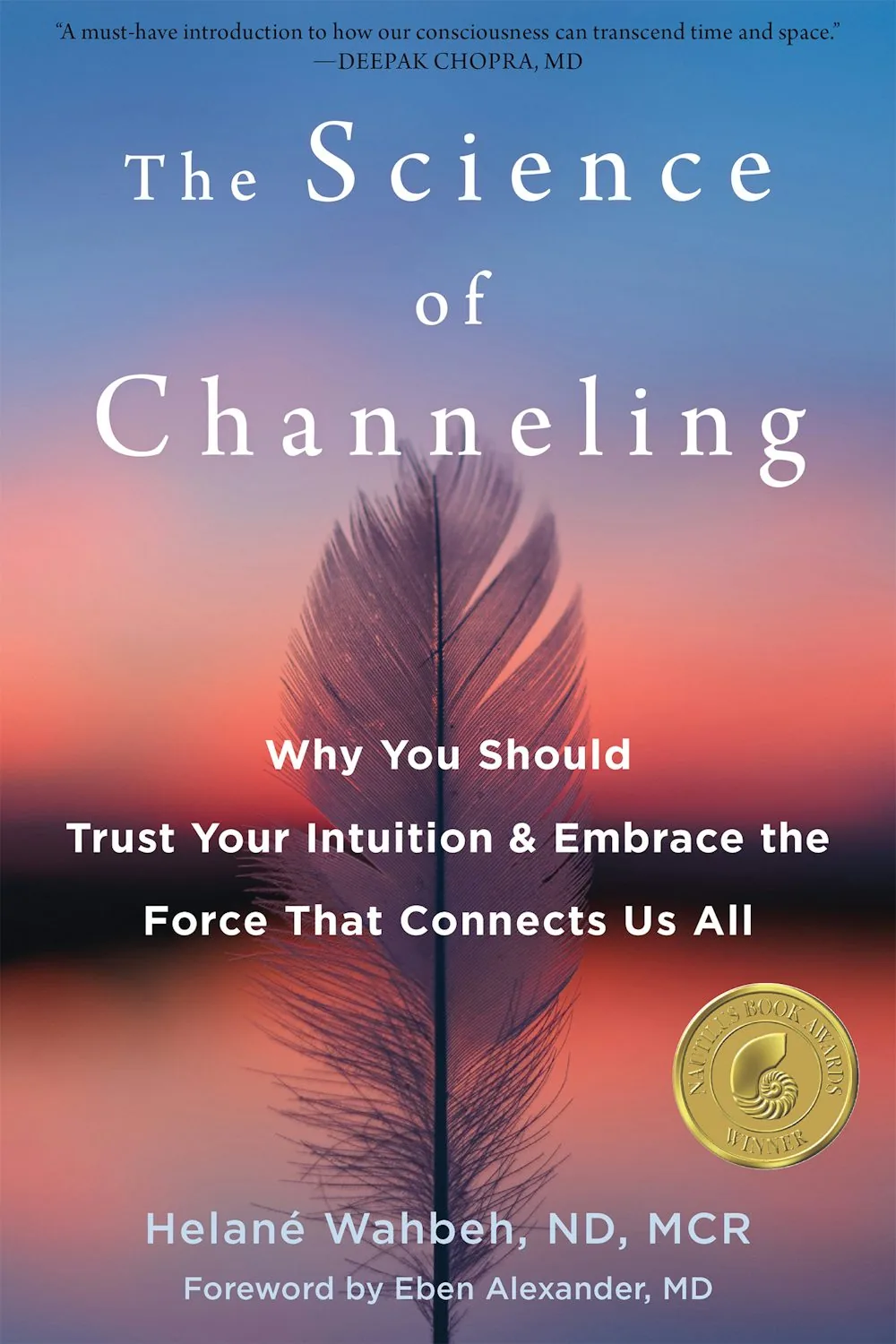
OUR STARTING POINT · HELANÉ WAHBEH
Wahbeh’s book brings research, personal accounts and practical reflection into the same conversation. Its invitation to take unusual experiences seriously inspires this page. Individual claims still need the evidence appropriate to them.
Our existing reading companion retains the Chapter 5 discussion, “Library of the Mind”, proposed pineal and DNA models, edition details, audiobook routes and interview links. This AkashicPSI page adds a research map.
DEFINE THE QUESTION
People report speech, writing, imagery or knowing that feels received rather than deliberately composed. Interviews, questionnaires and careful descriptions can study these reports.
Specific claims require targets and scoring defined beforehand, suitable comparison conditions, blinding and controls on ordinary information access.
Even an accurate result would leave competing explanations to investigate. A voice change, vivid impression or meaningful message alone cannot identify a non-physical source.
Wahbeh uses channeling as a broad umbrella. The studies below mainly concern trance channelling; results should not automatically be transferred to intuition, creative flow, telepathy or every form of mediumship.
SIX SELECTED PEER-REVIEWED PUBLICATIONS
Yes, peer-reviewed research exists. Its questions range from phenomenology and physiology to information content and ethics. Publication is a quality-control step; it does not by itself establish a paranormal mechanism.
2018 · Wahbeh, Carpenter & Radin
Design: Five full-trance channelers in a small exploratory pilot; questionnaires, group discussion and random-number-generator recording.
Reported findings: The paper describes shared themes in channelled accounts and an exploratory RNG difference between session conditions (p = 0.024).
A small exploratory signal needs independent, prospectively specified testing. It does not identify an external communicator. Access: official IONS abstract; full methods and analysis not audited here.
2019 · Wahbeh, Cannard, Okonsky & Delorme
Design: Thirteen adult trance channelers alternated channeling and comparison blocks on two days, with EEG, cardiac, skin-conductance, breathing and voice measurements.
Reported findings: Voice measures differed. The reported EEG frequency-power, cardiac, skin-response and breathing measures showed no substantive differences between conditions.
The tested measures did not establish a distinctive general physiological signature. This does not establish an external source or show that no other measurable differences could exist. Access: indexed abstract.
2020 · Wahbeh & Butzer
Design: Online survey of 83 people who identified as trance channelers.
Reported findings: Most described voluntary experiences, awareness during channeling and a positive impact. Most did not report symptom scores reaching pathological levels on the measures used.
Self-selected self-reports describe this sample, rather than demonstrating psychic accuracy or diagnosing individual readers. Access: indexed abstract.
2021 / 2022 · Pederzoli, Tressoldi & Wahbeh
Design: Conceptual and clinical comparison of channeling experiences with diagnostic descriptions of dissociative disorders. Online publication 2021; journal issue 2022.
Reported findings: The authors argue that many reported channeling experiences can be understood as non-pathological unusual experiences or non-pathological dissociative trance.
A diagnostic comparison does not test whether a claimed spirit exists or whether communicated information is accurate. Access: indexed abstract. This is the published paper, distinct from its earlier preprint.
2023 · Wahbeh, Speirn, Pederzoli & Tressoldi
Design: Fifteen channelers answered ten scientific questions in channeling and ordinary states; three judges assessed correspondence.
Reported findings: Answers differed between states, but answers across channelers showed virtually no correspondence. There was little support that participants perceived a shared information source, although some qualitative themes recurred.
Differences in answers do not demonstrate superior scientific accuracy. The 2022 preprint titled Is scientific information received from channeling useful? belongs to this publication lineage and is not a second independent study. Access: journal abstract.
2025 · Zemel & Wahbeh
Design: Two-stage survey and practitioner consensus process; 119 participants in the initial survey.
Reported findings: The researchers developed an aspirational ethics code; the follow-up survey reported 91% approval of the draft.
This evaluates professional standards and agreement, rather than psychic performance. The follow-up percentage must not be read as 91% of all initial participants without checking its denominator. Access: indexed abstract.
Peres et al. (2012), Neuroimaging during Trance State, in PLOS ONE, studied ten psychographers during trance and ordinary writing. It is relevant to automatic writing and brain correlates, but its small exploratory design cannot identify the source of the writing.
Two 2026 studies by Wahbeh and Glick examine semantic correspondence and qualitative meaning in communications attributed to extraterrestrial intelligences. Shared themes or semantic similarity cannot authenticate an extraterrestrial speaker. These are related analyses, rather than independent replications. See our existing research and presentation companion.
Explore the Worked Research Q&A → for competing explanations and related mediumship studies, including negative findings.
CREATIVITY · REPORTED EXHAUSTION · CONTEXT
The Reddit thread that prompted this inquiry began with artists and performers entering creative flow. Replies described both uplifting absorption and fatigue after readings. These are personal accounts, not controlled evidence that a psychic energy transfer causes exhaustion. Read the May 2019 discussion ↗
The studies summarised above do not establish that creative flow and trance channelling have a single mechanism, nor do they measure a proven “energy drain”. Reported tiredness deserves attention while explanations remain open.
Wahbeh’s discussion of mental health emphasises meaning, distress, daily functioning and relationships. Group averages cannot assess an individual. Experiences that become distressing or interfere with daily life warrant appropriate support.
PUBLIC N2N DISCOVERY TRAIL
These eleven entries were located in AkashicNET’s public title-search dataset. They include the 2023 journal-paper post, a Neuroscience News report, a trance-state review entry and routes to the book, interviews and existing editorial work. Multiple entries can concern the same study; eleven entries are not eleven peer-reviewed papers or independent confirmations. Post bodies and comments have not been newly reviewed for this guide.
A PRACTICAL RESEARCH PATH
These are AkashicNET methodological suggestions, not exercises quoted from Wahbeh’s book. No claim of psychic ability is required to approach experience with curiosity and care.