04:16 · Letter to Holly
Source: 1962 private correspondence.
Question: How did the original audience shape what McKenna disclosed?
Limit: One excerpt gives one view of his teenage self.


 AkashicNET × N2N × AkashicOMNI v0.5.0
AkashicINQUIRY002 · Published Draft · Requires Independent Review
Terence McKenna in letters, conversation and public performance. A listening companion to the first episode of Blue Streak.
A letter is written to someone. A living-room conversation gives other people room to change the subject. A public lecture asks one voice to carry a room. Blue Streak places those forms together to tell a story about how Terence McKenna became a public figure. Each form offers a different view, and the 2026 production adds its own point of view through narration, selection, sound design and dramatised readings.
The late letter supplies the episode’s title and a way to revisit its earlier material. The phrase “Zone Ghost of Hyperspace” can be read here as a name for a persona that persists through recordings, letters and listeners’ memories. That is this draft’s reading of the title and editorial structure. A claim about a separately existing presence would require different evidence.
The 2026 production selects and frames these materials. The dates describe the source items. They do not provide an uninterrupted biography. Official episode notes
YouTube Edition · 1:17:08
Each band marks one of the 12 official YouTube chapters. Width shows elapsed time between chapter starts. It does not measure speaking time or how much source audio was used. See the timestamped chapter guide
Source: 1962 private correspondence.
Question: How did the original audience shape what McKenna disclosed?
Limit: One excerpt gives one view of his teenage self.
Source: 1984 living-room recording.
Question: Who introduces, redirects or qualifies the discussion?
Limit: The show notes identify the context. Speaker turns still need audio verification.
Source: 24 August 1989, Los Angeles.
Question: Where does McKenna move among social critique, ecological analogy and testable claims?
Limit: The chapter titles identify topics. Exact wording and argumentative sequence require playback.
Source: Late-1990s correspondence.
Question: What belongs to the document, its reading and the production’s framing?
Limit: The recipient remains unidentified in the show notes.
What would change this reading? A checked transcript or an independent listening pass could reveal that nearby context, a change of speaker or a production edit alters the interpretation.
Starts use the official YouTube video’s markers. Each question identifies something a reviewer can check in the recording. Audio editions may run to different times.
The letters bracket the episode at two different points in McKenna’s life. A plausible reading is that the contrast gives the audience a sense of change over time. Another is that the contrast comes partly from audience, genre and what the producers selected. The letters have different recipients and only excerpts are identified. They cannot carry a developmental claim on their own.
Kathleen Harrison is identified as a participant and collaborator. Treat the conversation as shared authorship of the encounter. Who introduces a topic, supplies the context, disagrees or redirects the discussion may change how we read McKenna’s public role. Those details require speaker-by-speaker checking. The presence of Faustin and Brian in the recording context does not settle who speaks in the excerpt.
The chapter titles move from cultural crisis to technology, symbiosis, planetary change and possible futures. A reader can follow where the scale shifts from a person to a society or planet. At each step ask what does the connecting work: an example, a causal mechanism, an analogy or a prediction. The independent listing gives 24 August 1989 at the Ford Theatre, Los Angeles. Audio bibliography
A possible future can organise a story without providing information about the future. A literal time-travel or historical-singularity claim would require a prediction with a date, an observable and a clear way it could fail. In the late letter, separate the written text, its performance and the host’s framing. Preserve uncertainties where the notes do not identify the recipient or the full context.
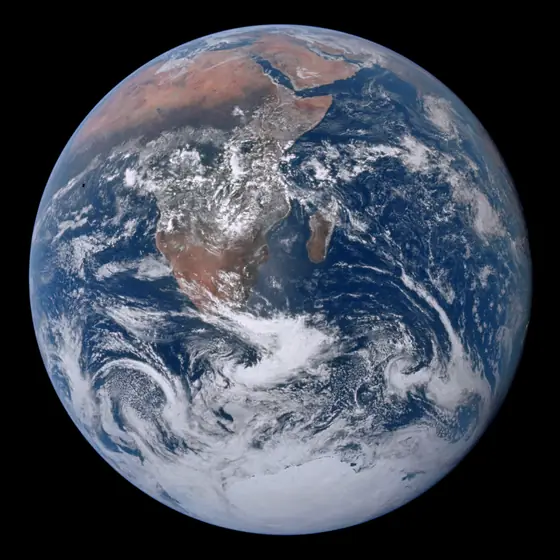
Lovelock and Margulis’s 1974 proposal asks whether the biosphere participates in regulating conditions at the Earth’s surface. That is a scientific claim about feedback and can be assessed against defined variables and mechanisms. Earth as a living presence, Eros as a language of affinity and a planetary birth story call for interpretation of a different kind. The chapter markers indicate where to check which sense is in play. The NASA photograph helps readers think at planetary scale. It cannot adjudicate those claims. Lovelock & Margulis
Invocations of an “archaic revival” can be read as a critique of modern institutions. Any claim that a specific community held a particular practice or belief needs a community-specific source and appropriate cultural authority. The term itself is too broad to serve as an account of Indigenous cultures. CARE Principles for Indigenous Data Governance
AkashicINQUIRY001 asks how people describe enclosure, thresholds and visible geometry. The term “hyperspace” can help a speaker communicate immersion, but different people may use it for different experiences. The Lawrence study coded 105 explicit waiting rooms among 3,778 online reports. Sanders and colleagues used post-session interviews to investigate the development of immersive space and perceived presences. Both sources help define what a report can describe. Neither source independently adjudicates the origin of a particular presence. Inquiry 001 · Lawrence et al. · Sanders et al.
Discern establishes source, version, speaker and unit of analysis. Deepen compares genre, selection and performance as explanations of apparent personal change. Synthesise records what each perspective contributes and what would change the reading. AkashicOMNI v0.5.0 · Sandbox Research Toolkit
Track when a listener experiences recognition or conviction. Keep the feeling distinct from what the archive corroborates.
Read Gaia, Eros and “Zone Ghost” in their genre and historical setting. Require tradition-specific provenance for cultural claims.
Treat the domestic conversation as a setting in which meaning is made between people. Compare its audience and purpose with the public lecture.
Assess change in public role against two alternatives, a change of audience and retrospective editorial selection.
The episode’s ecological imagery can prompt discussion of renewal. Evidence of measurable repair or sustained benefit would require data outside this episode.
Distinguish imagined futures, felt immersion and claims about physical dimensions. Retain unfamiliar descriptions without converting them into mechanisms.
Compare genre, performer, editor and audience as explanations of how an apparent arc of identity is constructed.
Check coherence between premise and conclusion. A compelling analogy can organise a reading. A causal bridge needs an observable and comparator.
Date the source events separately from the 2026 production. Treat the late letter’s date as approximate.
Document how today’s platforms, show notes and dramatised readings shape access to the archival voice.
Make the framing test auditable and identify what would shift the interpretation. Document version differences before claiming change.
Keep individual experience, social circulation and planetary feedback at their respective scales. State the evidence a bridge between scales would need.
Hypothesis. Listeners who hear identical archival audio with an identity-focused introduction will make more biographical attributions than listeners who hear it after a plain source note. Keep this as a test of editorial framing.
Lux Natura’s official video supplied chapter starts. Publisher show notes supplied the archive list and credits. Episode released 10 November 2026. Official programme page identifies Klea McKenna as host and Lux Natura and SpectreVision Radio as producers. The independent audio bibliography supports the venue and date for the 1989 material. The Patreon supplements were listed by the publisher and their contents were not reviewed.
The header uses AI-generated AkashicNET concept artwork for this inquiry and the AkashicINQUIRY Seven Doorways sigil. It depicts a fictional listening room. Figures 1 and 2 were drawn for this inquiry from the cited source metadata and research method.

